

Oxford Vice-Chancellor welcomes growing academic partnerships with Central Asia
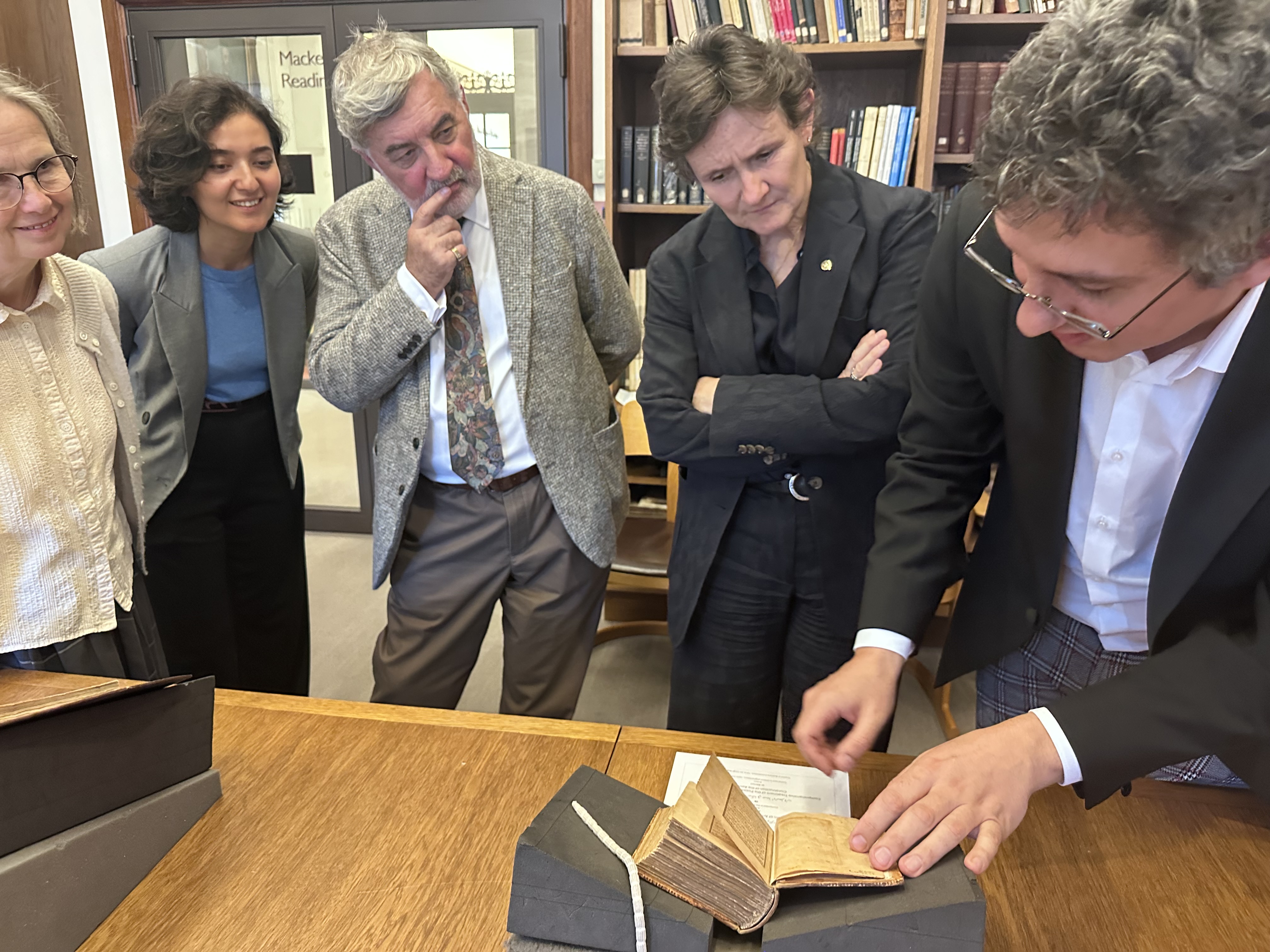
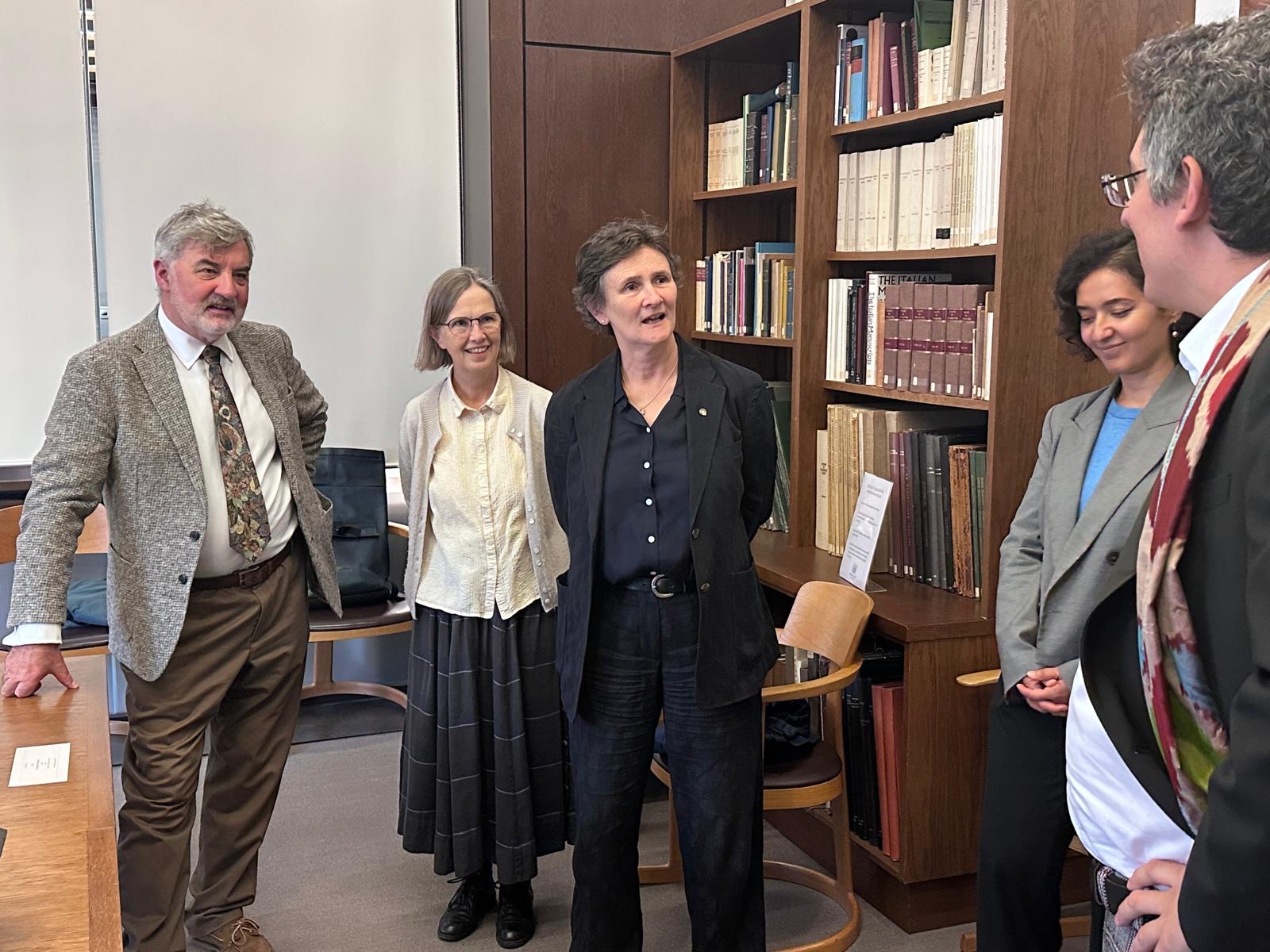
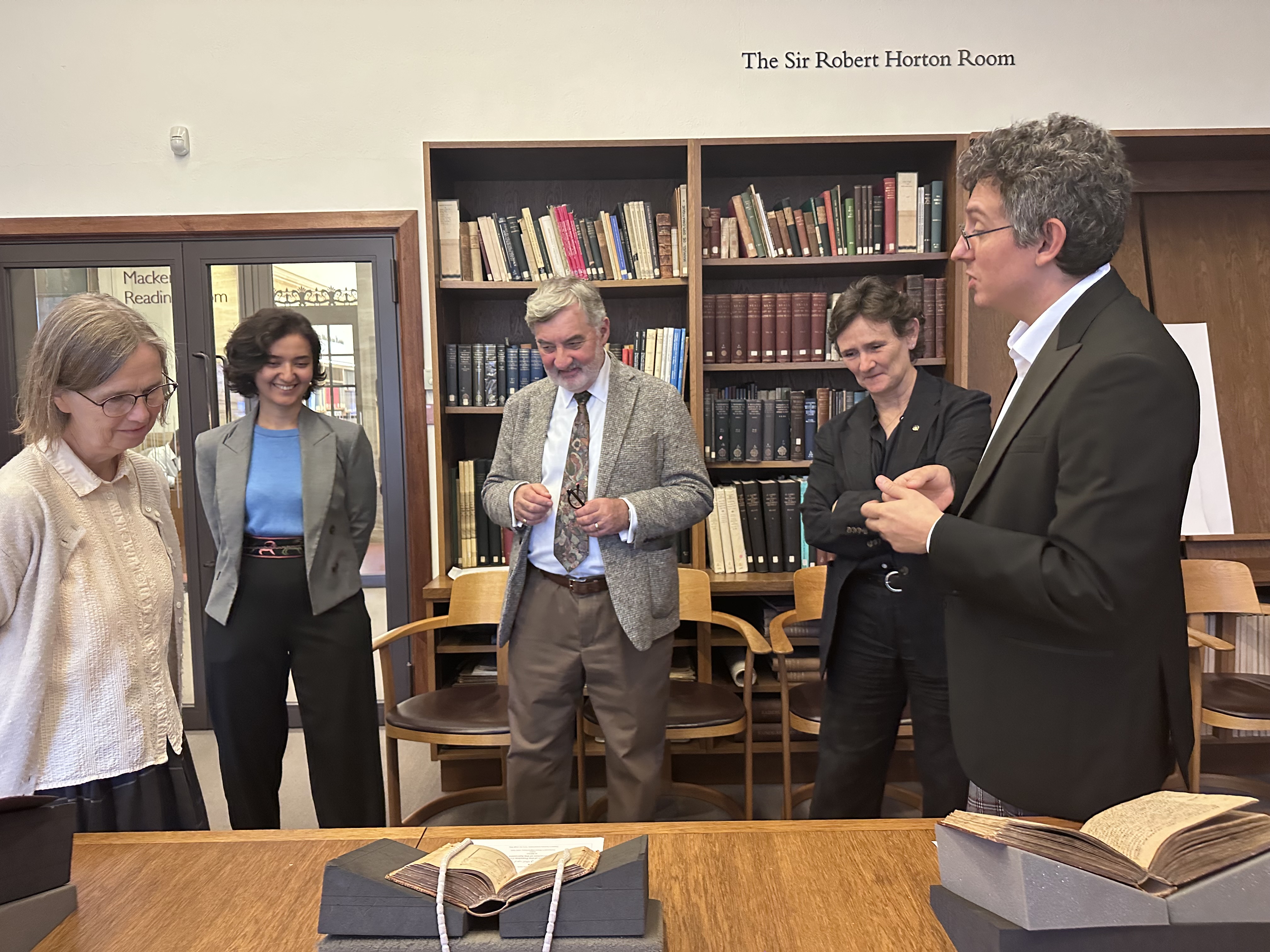
The University of Oxford’s Vice-Chancellor, Professor Irene Tracey, attended a viewing of manuscripts from Kazakhstan and Uzbekistan at the Weston Library on 9 October, alongside Professor Henrietta Harrison, Chair of the Faculty of Asian and Middle Eastern Studies, and Lord John Alderdice, the United Kingdom’s Trade Envoy to Azerbaijan and Central Asia. The occasion provided an opportunity to highlight the Faculty’s growing academic and cultural partnerships with Central Asia.
The viewing brought together Leyla Najafzada, Director of the Oxford Birsöz Initiative, and Nicholas Kontovas, Lecturer in Uzbek and Subject Librarian, who presented the manuscripts. The occasion highlighted the Faculty’s ongoing work to strengthen Oxford’s engagement with the region through its manuscript collections, language teaching, research and interdisciplinary collaboration. During the visit, the Vice-Chancellor expressed her strong support for Oxford’s developing strategic partnerships with Central Asian countries, emphasising the importance of leadership in partnership and the value of building meaningful and lasting academic relationships across the world.
The occasion also reflected themes from the Vice-Chancellor’s Oration on 6 October, particularly the central role of the humanities in Oxford’s identity, the University’s responsibility to preserve and share its collections, and the importance of equipping students with the knowledge and skills to contribute nationally and internationally.
The Faculty’s growing engagement with Central Asia reflects these shared priorities. Through the Oxford Birsöz Initiative, and in partnership with Wolfson College’s Central Asia and Turkic Studies (CATS) cluster, the Faculty is bringing together expertise from across disciplines to support research, teaching and international academic exchange. These collaborative efforts are helping to strengthen connections across the University and develop new opportunities for engagement with Central Asia.
Oxford is currently the only UK academic institution offering teaching in Azerbaijani, Uzbek and Kazakh, reflecting the Faculty’s longstanding commitment to the study of the languages, histories and cultures of the region. This distinctive provision is complemented by developing academic partnerships, including the recently established Oxford Uzbek Studies Programme, which supports further opportunities for scholarly exchange and collaboration.
The visit also took place in a year marking 35 years since the Central Asian countries gained independence, offering a timely opportunity to highlight the region’s rich cultural and intellectual heritage and Oxford’s growing academic engagement with its institutions and communities.
Through its collections, language teaching and growing academic partnerships, the Faculty looks forward to continuing its engagement with Central Asia and contributing to wider opportunities for collaboration across the University and beyond.

